Exercise for non-physical threats
Translation of the original in Spanish. Read it in: CatalàCastellano
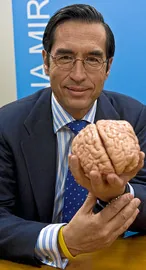
This week I am finishing reading the book "Ahora YO, ¿y si creas tu propio futuro en lugar de encontrártelo?" by Dr. Mario Alonso Puig. When I finish the book I would like to write a small review of the many interesting contents it presents to us. But right now what I would like to do is a small summary, in the form of a notebook, of a passage from his book where it is explained to us what makes situations that are not of physical danger activate our defence mechanisms and how we can change our reactions to these circumstances.
We could often say that we live in constant tension because simultaneously we have to protect the physical body, show the image of who we are expected to be and hide the image of what we fear being. As you can imagine this work produces significant wear and ends up taking its toll on our vitality and health. Fear of change is often talked about; nowadays this fear rarely has to do with physical survival. But it does usually have a strong relationship with the image of ourselves that we want to protect.
So, the strategy proposed to us in the book is about the feeling of threat we feel when protecting our image. It is worth remembering that when a physical threat is felt, attack, flight and freeze mechanisms are activated. These mechanisms have been very useful throughout evolution to protect us from physical threats but when we enter states of threat due to non-physical issues these instinctive mechanisms are of no use to us, on the contrary, they harm us.
A strategy to avoid these reactions is:
- Set two elements in motion. The mental element is acceptance and the physical one is control of breathing. When feeling fear because we believe our image is threatened, the fear of criticism, of disappointing others, of what people will say, etc. In these situations acceptance consists of doing the exercise of observing ourselves from outside, projecting our image seen from outside in order to observe what our reactions are. Observing the reactions of the body, changes in breathing, increased tension. It is about establishing a distance between the emotions we are experiencing and the fact of also being observers of these reactions as if they were not our own. This observation process is called meta-attention.
- Control of breathing. When fear takes hold of us the first element that changes is breathing. Often it speeds up or, on the contrary, we stop breathing, which is called tachypnea. To manage to take control we can start taking air in consciously and then letting it out with an exhalation longer than the inhalation. It is important to feel the abdomen swell. As we notice that control over breathing increases we can say the word one when inhaling and also when exhaling. At this point we must imagine that blue-coloured air enters through our nose, fills the lungs and finally reaches the kidneys.
It is interesting to know why this exercise works. Controlled and rhythmic breathing sends a message to the brain that all is well. Saying the word one when inhaling and exhaling forces the brain to concentrate on breathing, leaving no room for what occupies us. The colour blue is processed by the right hemisphere of the brain and this processes it as a signal of calm and harmony. We must not forget that fears are largely the fruit of our unconscious and the fastest way to connect with this part of our being is through the right hemisphere.
In a second phase the question we should ask ourselves is: "what am I doing to myself to feel like this?" we must let the answer to this question come to us from the unconscious. We must be very attentive and open. Because in the unconscious there are two forces, one that cancels us out and another that helps us. The one that cancels us out has been fed by the toxic thoughts we have picked up from our environment and from culture.
To finish these notes I want to paraphrase the following concept: "
Those who are truly compassionate understand that all the harm we men cause to ourselves and to others is not due to an intrinsic evil, but because we live in fear, we feel cornered and that makes us intolerant and aggressive.
"
1 comment
Comments from the old blog, as they were written. Comments are closed.
Emili Barberà
Cierto, el miedo es una emoción muy fuerte que, tanto si provoca una paralización como una reacción de ira, es muy dañino. La atención constante en el presente a través de la respiración es una arma poderosisima para dialogar con él..
El libro promete ser interesante, habrá que leerlo. Las recomendaciones muy apropiadas.
Gracias