2024 Summary
Translation of the original in Spanish. Read it in: CatalàCastellano
2024 has been a year full of contrasts, where the lessons learned, the professional challenges and the family joy have lived together to shape an unforgettable experience. Over these twelve months, I have strengthened values such as patience and communication, and I have lived moments that have marked my growth, both personal and professional.
Lessons learned
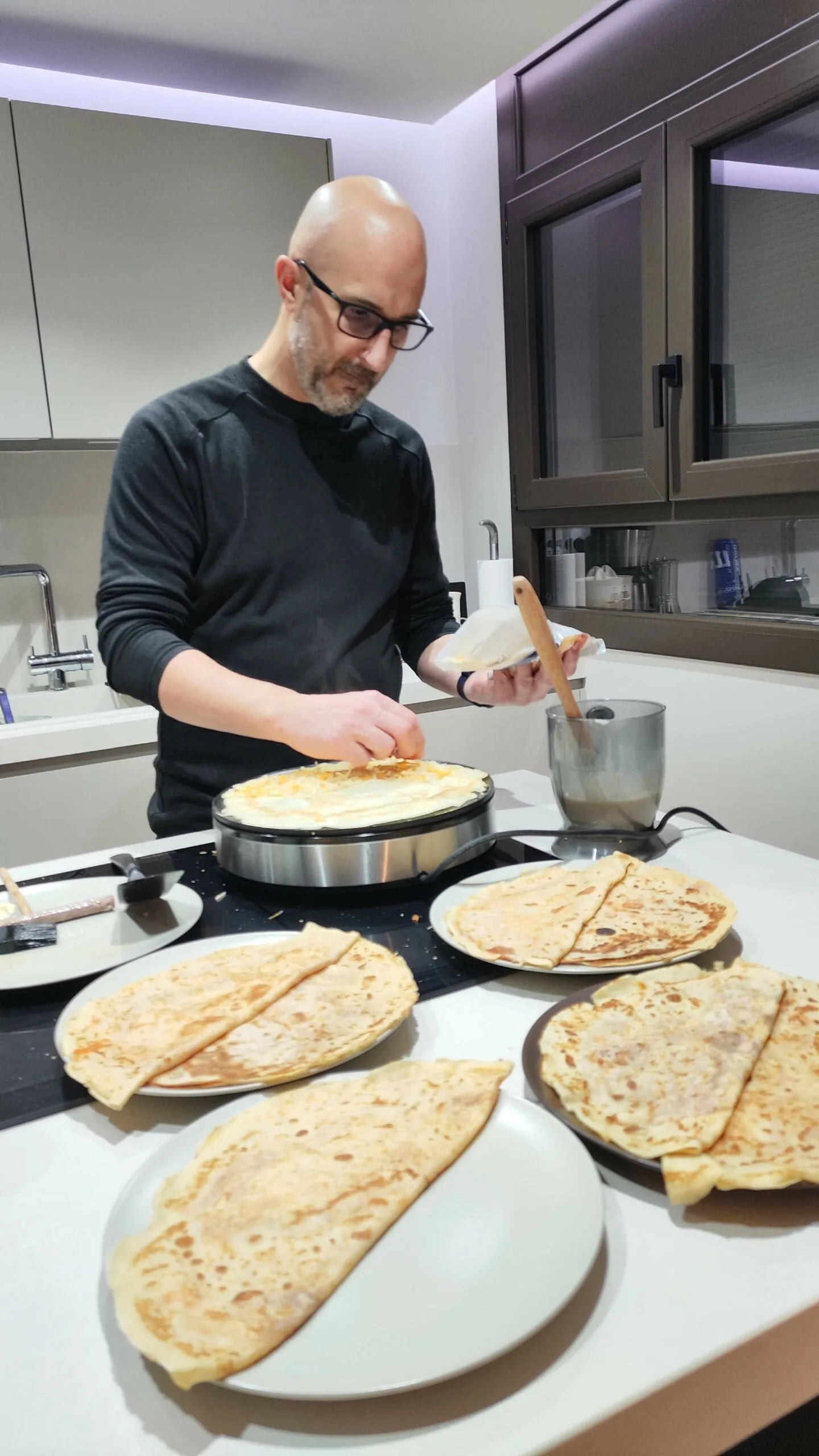
This 2024 has reaffirmed my belief that patience and effective communication are essential allies in any field, from family to work. I have come to understand better the importance of managing stress without losing empathy towards those around me; I have had to learn to listen more and not jump to hasty conclusions. Although it is still a challenge, every small step forward in these aspects makes a real difference in my day to day.
I have also come to value the simplification of processes and time management. Sometimes, taking a couple of fewer steps is more productive than deploying a hyper-complex strategy that ends up overwhelming me. In this sense, reflecting on my emotions has helped me to tell the difference between what is urgent and what is truly important, balancing my priorities better.
Another unusual lesson I have taken on is knowing how to combine my dependence on technology with the need for my own judgement. Interacting every day with my “friend GePeTo” (GPT) taught me that AI can bring a lot of efficiency and creativity, but also that one must keep a critical spirit and know when to follow one's own intuition. Curiously, going back to complex technical projects and solving them with a simpler approach made me rediscover the value of the “minimum viable solution”.
Finally, I have realised that, just as in teaching, it is key to leave room for the autonomous growth of others. Seeing my children and students find their own answers, and even outdo me in some solutions, has reminded me how rewarding it is to make space for collaboration and shared learning. This, in the end, is what turns life into a continuous journey of discovery.
Projects and personal brand
This 2024 has been a year of contrasts. On the one hand, activity at Industry 4.0 Systems keeps rising: keeping up the regularity of publications and going deeper into little-explored technical topics has become our main achievement. This sustained effort makes me proud and reinforces my passion for technology outreach.
On the other hand, my personal brand has been almost on hold. Too much work and large-scale client projects have absorbed me completely. Even so, I want to break with this dynamic in 2025, pick up my presence on social networks again and boost my visibility. A first attempt at this was G33k.team: I registered a pilot, but the lack of commitment of the partner I found left the project on standby. I trust I will be able to shape it when I find the right moment and the right team.
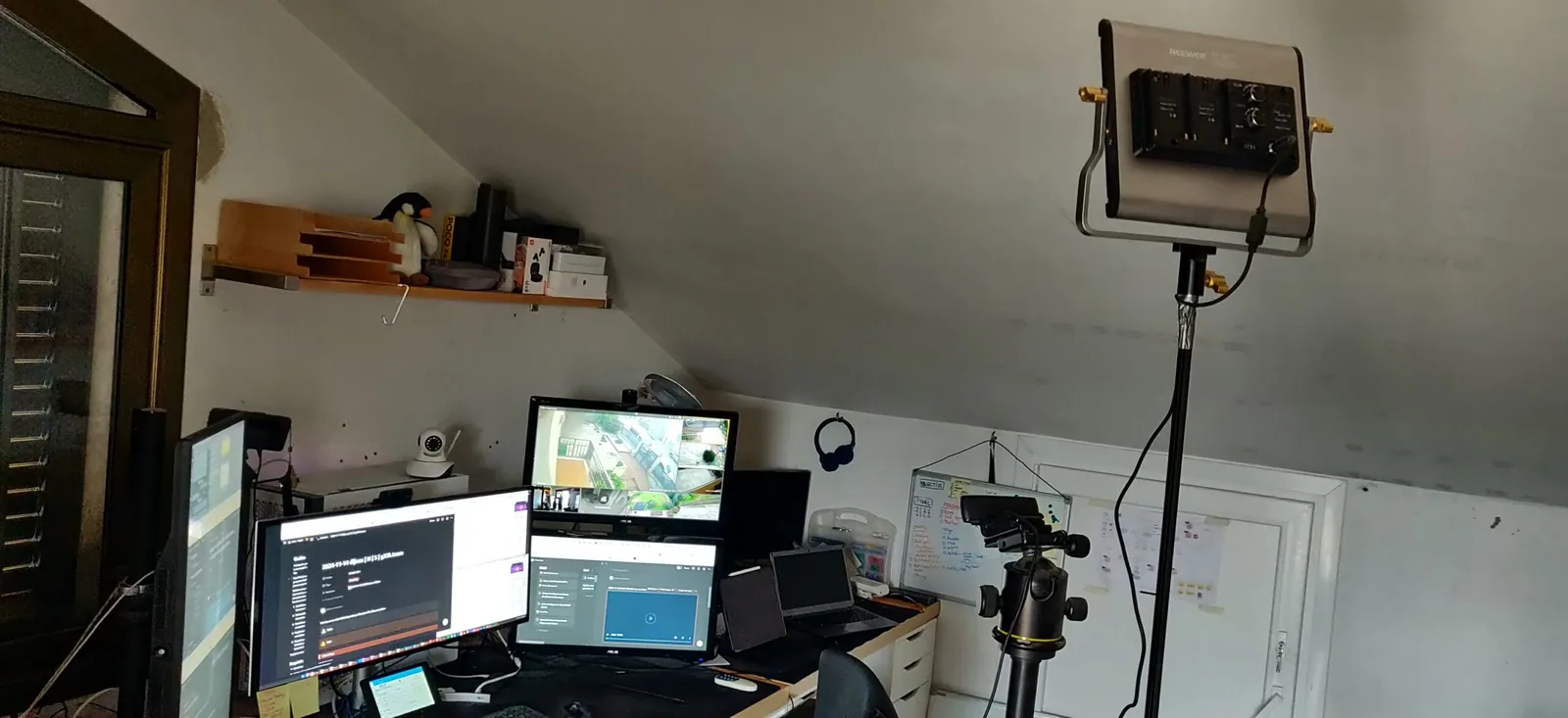
As for training, it has been a year with few readings and barely the odd webinar; I did not manage to finish a single book. The explosion of AI has transformed the way I consume information: my “new friend” is GePeTo (GPT), as I jokingly call ChatGPT and its derivatives (Gemini, Claude Sonnet, etc.). I spend hours interacting with these models, which has displaced part of my traditional reading time.
Finally, let me mention Joan Verdaguer, a retired secondary school teacher who has inspired me deeply. His passion for keeping on learning, his diary full of events and the way he shares knowledge —even through papers based on experiments he carries out with other colleagues— are an example of unquenchable energy. Seeing his awake mind, his critical eye and his desire to contribute reminds me that it is never too late to keep growing.
Family and personal matters
This year I turned 47, with the memory of that car accident 21 years ago very present. A gift I fell in love with was receiving “47 motius per estimar-te” from my wife, a detail that made me reflect on the passage of time and the value of every day. Thank you Meumins.
The children turned 6 and 8: Nil is now in the first year and Roc in the third year. I am amazed at how fast they grow; in only three years, Roc will have to go and study outside the village, something I still have not fully taken in. At the same time, being able to reason with them and make plans together has become one of my greatest joys. We will always keep the memory of Pol, who would have turned 10.
With the children, I have had several reasons to be proud: at the Wedo Party they gave an incredible robotics presentation, and Nil won the Sant Jordi drawing prize. That said, there has been no lack of scares: Nil broke a tooth at the beginning of the year and later fractured his ulna and radius at Pedro Gil's hockey camp. Fortunately, thanks to a 3D splint from the IP community, the recovery was easier.
We travelled with the family from Valencia to Besseit, Arnes and Vall-de-roures. We discovered a restaurant that is a gem in La Ràpita, I recommend “Celleteca Cal Bayó”. As well as discovering that the best local sandwich is served 5km from home, an opportunity I did not let slip to try it. But the big trip of the year was to Florida, a plan that took me hours of preparation and that ranged from the Daytona 500 circuit to Key West, passing through Cape Canaveral (NASA facilities), Orlando (Disney parks), Naples, Sarasota, the Everglades and Miami. An unforgettable experience.

A year of big changes as far as hockey is concerned. Both Roc and Nil have moved to the hockey club of Sant Pere de Riudebitlles. A shame to have to leave the village but you cannot have everything. This new stage is being a real pleasure and an opportunity for the children. Even though this has meant saying goodbye to their lifelong coach, Carla. Thank you again for your great work with the children.
According to the analysis of an AI model of my personal diary notes, most days were recorded with a positive mood and stable health (60-70%), with a smaller group with ups and downs and only a few marked by considerable discomfort. Overall, the prevailing feeling was one of well-being, without too frequent complaints throughout the year.
The same analysis suggests that I devoted a relevant part of the time to work (50%), followed by a broad block dedicated to the family (45%), while personal leisure was left in a smaller space (5%).
Talks and business schools
This 2024 has been marked by the closing of ESADE's Master of Science in Digital Business, where I have continued teaching Digital Technology, Digital LABs and Accelerating Innovation. In addition, I was lucky enough to supervise two theses, one of which obtained the highest grade in the whole university, focused on the “Impact of Neobanks on Traditional Banks in the Swiss Banking Industry”. I also took part as a member of a thesis panel, an experience that has allowed me to see up close the talent and dedication of the students in their research projects.
On the other hand, I have kept up my collaboration with the technology school Zigurat, teaching three modules in the Master in Digital Business. At ISDI, I gave a masterclass for DAMM focused on data-driven companies and another on Internet of Things in its Master of Internet Business.
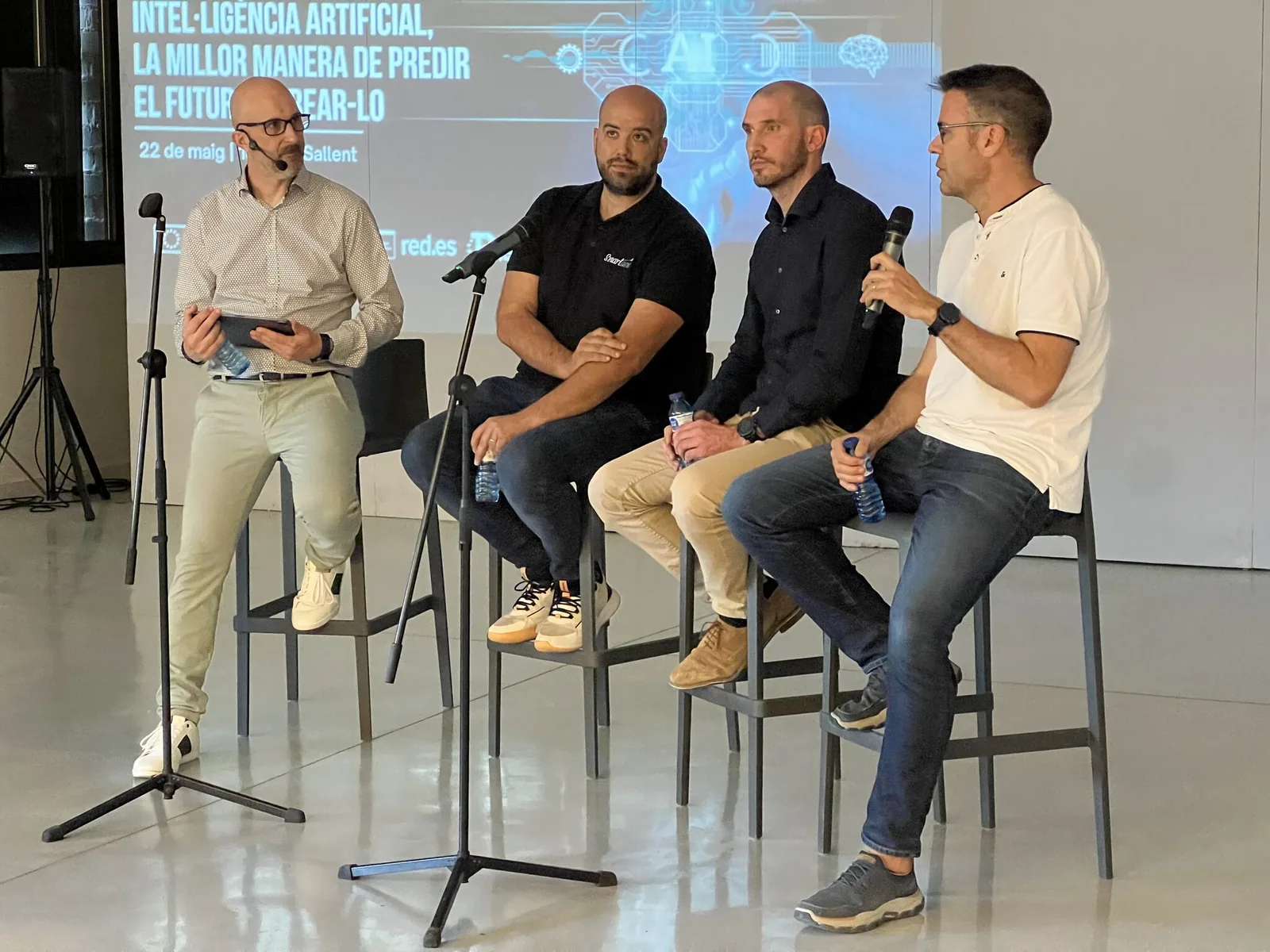
Outside the purely academic environment, I want to highlight the talk on AI I gave in Sallent, where the great turnout especially pleased me, and the in-company talk at ISDIN, thanks to the invitation of my old friend Rod, to address the problem of data silos in organisations. All in all, it has been a year of intense teaching activity, with opportunities to share knowledge and learn a little more every day.
According to the analysis the AI made of my notes, Nexiona concentrated a large part of my time, followed by i2Cat, where I devoted an equally significant block to automation and deployments. Sàbat occupied a more moderate space, mainly because of the development of the new IoT Gateway NG. Meanwhile, the teaching collaborations (ESADE, Zigurat, ISDI) and other projects completed the agenda with a smaller percentage.
Professional projects
A year of extremes in my role as consultant and mentor. With Nexiona we have overcome important technical challenges and achieved a large-scale international project with factories spread all over the world. Even so, I have felt the departure of Yev and Néstor, key colleagues who leave a gap both professionally and personally in my day to day with the client.
At i2Cat, my work has focused on automating documentation and deployments using Ansible AWX and Ansible Forms, helping to speed up internal processes. Meanwhile, at Sàbat, one of the great milestones was the development of the new “IoT Gateway NG”, already deployed in almost all of its production lines and with plans to complete it in 2025.
The bitter note of the year comes from AKO, a company I had been collaborating with for more than a decade and which I have lost as a client after a change of manager. On the other hand, I have also learned that I must manage work peaks better: this year I took on excessive volumes that I do not wish to repeat in 2025.
Technical summary
Unlike 2023, in 2024 my dedication to technical topics has increased notably, let us say out of necessity. In my opinion the great difference between this work and what I had done at other times of my life is the strong vocation to share and help others with all this effort. I would even allow myself to add the word inspire. I really feel it as a great reward when I notice that my work is the seed of other people's developments. It really is a great personal motivation at this point in my life.
It is also worth highlighting a very relevant change in the architecture of my home infrastructure. A few years ago I made the decision to reduce my home servers to the extreme and I concentrated all my needs in a NAS and a video surveillance server. Unfortunately, the computing capabilities of the NAS with all the services I require for day to day made it difficult and expensive to maintain, especially in time spent every time it had to be restarted for updates or similar. It seemed strange not to end up investing a whole morning, or a whole afternoon, in a routine system update.
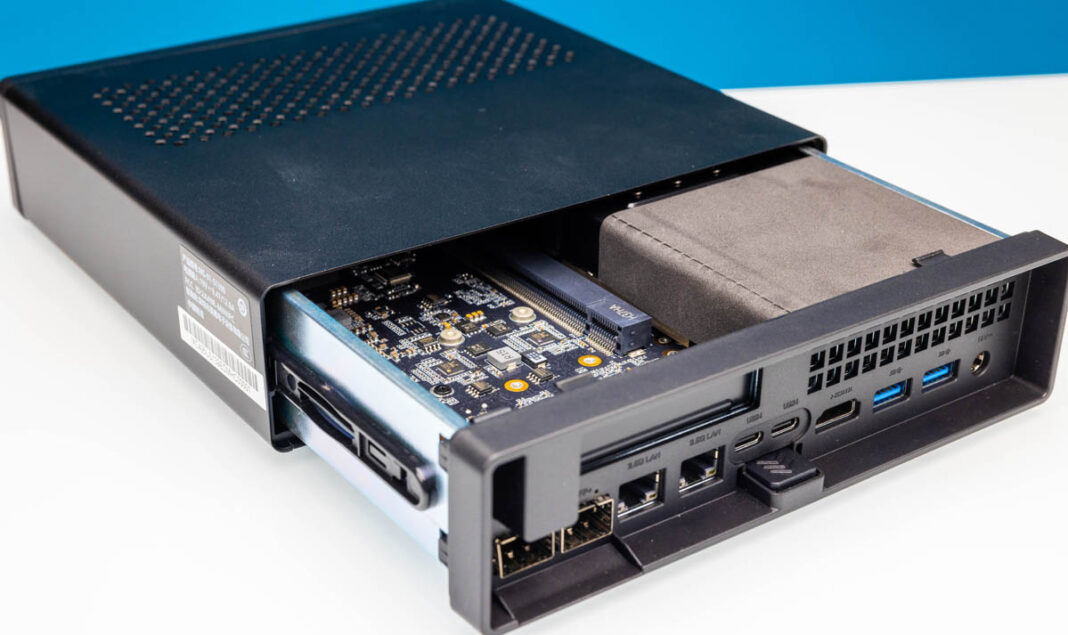
So I decided to buy a Minisforum MS-01. Plenty of power, little space, little noise and a good price.
-
CPU: 14-core (6-mt/8-st) 13th Gen Intel Core i9-13900H [MST AMCP] speed (MHz): avg: 929 min/max: 400/5200:5400:4100
-
Disk SSD NVMe 1TB - Kingston model: OM3PGP41024P-A0
-
RAM DDR5 32GiB - 2xSODIMM Synchronous 5600 MHz (Crucial CT16G56C46S5.M8G1)
-
Graphics: Intel Raptor Lake-P [Iris Xe Graphics]
-
Network:
-
2x Intel Ethernet X710 for 10GbE SFP+
-
2x Intel Ethernet I226-V
-
Intel Wi-Fi 6 AX210/AX211/AX411 160MHz
All this power to run a Proxmox that allows me to manage the containers with the network services and, even more importantly, the Home Assistant that controls the house.
Thanks to AI tools I have been able to trace in my notes all the technologies I have touched this year and that I have talked about in my personal diary. Here is a list in case it can be useful to someone.
? NOTE: I recommend that you pay special attention to the projects I have developed, which I have marked with this icon: ?
oriolrius.cat
This year I have had to take drastic measures with the Blog because the security holes in WordPress have reached unsuspected levels. There were weeks when I had more than one hack per week, I could not keep up with restoring the backups. Luckily this issue seems to be behind us with these measures I describe.
Infrastructure and Virtualisation
-
Docker, containers and derivatives; I keep advancing to very deep levels of knowledge of how it works. Which leads me to use these tools to the limit of their functionality.
-
Portainer for container management. Despite being a fan, every day I am a little more tired of the incompatibilities it generates and how unfriendly it is for debugging problems. IMHO right now the best thing is to use it to manage Docker SWARM and perhaps some small Kubernetes.
-
Dockge I use it more and more as an alternative to Portainer when what is needed is to manage Docker Compose.
-
Traefik as reverse proxy and load balancer. I finally decided to set it up in several of the architectures I am involved in, especially because of its flexibility in hot configuration. Honestly I am very happy, although nothing is perfect, of course.
-
NGINX Unit, it also looks excellent and is very little known. I have been able to try it but not enough to say I master it, although it is well worth continuing to invest time in.
-
NGINX Proxy Manager (NPM), here I have indeed invested a huge amount of time. Even getting to trace its code to understand how it performed multiple functions so that I could customise it to very interesting extremes.
-
Crowdsec - the open-source and participative security solution offering crowdsourced protection against malicious IPs and access to the most advanced real-world CTI. I have set it up together with NPM and it adds a powerful filtering layer.
-
Virtualisation and Management:
-
Multipass for lightweight virtual machines, I have been using it on Windows 11. I got to have more than 15 Ubuntu VMs running for my ESADE students, specifically to do IoT practicals.
-
Proxmox for infrastructure virtualisation combined with ZeroTier and VLANs, this is the use I am giving it within my personal infrastructure.
-
Inventory
-
GLPI a very old solution and it shows every time we have to deploy it. But as old as it is also alive and in full evolution. You can tell it is generating business around it and that also shows when using it, since its coverage and inventory functionality never stops growing. I should also highlight its ability to integrate with Zabbix. Surely little by little its API will reflect that, because right now it is one of the weakest points I find in it.
Automation and DevOps
-
Ansible: I started automating with Ansible many years ago and the truth is that the product never ceases to surprise me positively.
-
Ansible Forms, it allows you to create forms to define the input variables of Ansible Playbooks and this is wonderful for using it as a process management interface for users with a less technical profile.
-
AWX; in addition, Ansible Forms works perfectly with AWX. I also want t
-
Semaphore it is also the tool I used as an alternative to Ansible Forms, it is a very interesting tool and worth taking into account, since right now it not only allows you to do automations with Ansible, but also Terraform, OpenTofu, Python and much more.
-
CI/CD and Version Control:
-
GitLab CI/CD workflows; countless the hours I spent perfecting processes with this system. Although very powerful and versatile, it must be admitted that still far from the next benchmark.
-
GitHub workflows, especially in love with the following workflow for its simplicity and usefulness when creating my docker images when I do a development: .github/workflows/publish.yml
-
Implementation of Docsify for automated documentation
Security and Networks
-
Authentication and Access:
-
Keycloak and Authelia for identity management; honestly I had high hopes for Authelia but I quickly saw that it is something very small and of very limited scope, especially next to the almighty monster that is Keycloak. Curiously, 2024 has been the year of IAM, IDM and all these kinds of tools. I have been trying to bet on this kind of solution for at least 8 years but until now it did not take off.
-
Cloudflare Zero Trust Tunnel - Cloudflare Tunnel provides you with a secure way to connect your resources to Cloudflare without a publicly routable IP address. With Tunnel, you do not send traffic to an external IP — instead, a lightweight daemon in your infrastructure (cloudflared) creates outbound-only connections to Cloudflare's global network. Cloudflare Tunnel can connect HTTP web servers, SSH servers, remote desktops, and other protocols safely to Cloudflare. This way, your origins can serve traffic through Cloudflare without being vulnerable to attacks that bypass Cloudflare. Regarding this point, I would add that I am left wanting to try the self-hosted solution that in theory does the same: pangolin.
-
? SSH Stealth (github repos); I have created this simple port knocking tool. If you are interested in the topic I recommend a much more sophisticated tool, but everything has its pros and cons.
-
https://github.com/eeriedusk/knockles - eBPF Port Knocking Tool
-
https://github.com/mrash/fwknop - Single Packet Authorization > Port Knocking
-
Monitoring and Security:
-
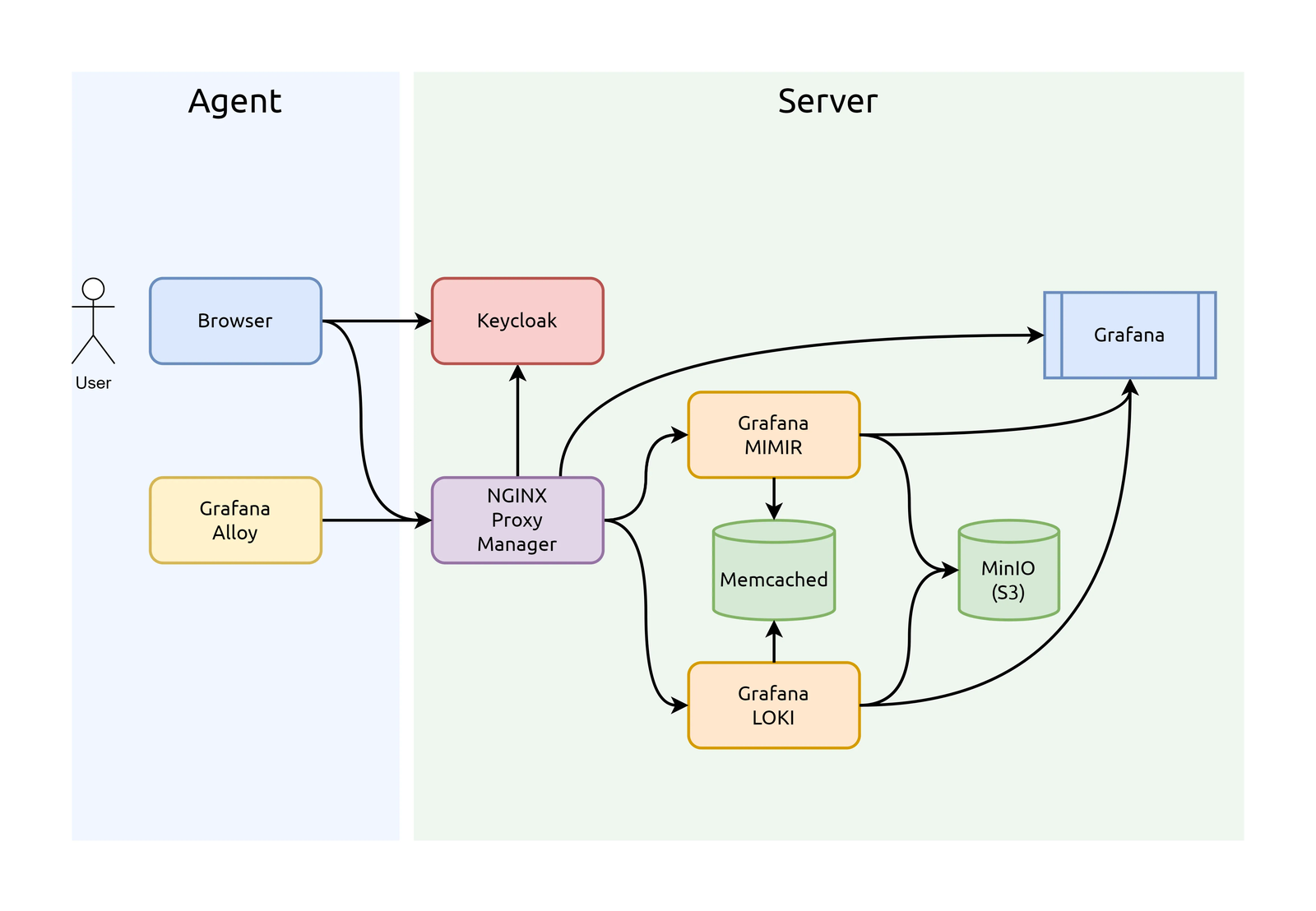
Self-hosted observability stack: Grafana Alloy + Keycloak + Grafana Mimir + Grafana Loki + Grafana Dashboards + NPM with OAuth2-proxy. I have devoted endless hours to perfecting the infrastructure described below. If you are interested in the topic I highly recommend the series of videos published about it at industry40.systems.
-
-
Grafana dashboard to monitor Linux with Docker using logs in Loki and metrics in Mimir; I published it openly in case it can help someone.
-
Grafana Grizzly - a simple console tool that is worth mentioning since it is ideal for provisioning Grafana; it allows you to interact with the API in a simple and scalable way, ideal for automating the deployment of *data sources, dashboards, *alerts and much more.
-
Wazuh for security - despite the experience and suffering accumulated in getting it running I did not stay to learn the details of how it works. I will just say that it is an XDR and SIEM that look excellent. IMHO these tools always have the same drama, which is the management of false positives.
-
Uptime Kuma for monitoring, this is one of the great discoveries. A very easy tool to configure and with functions that are easy to understand, as well as being small and with a limited data set. But with a great function and that is that the metrics generated are exported directly in Prometheus format and can be easily integrated with Grafana Alloy.
-
Autokuma, in addition I integrated this service that adds monitors to Uptime Kuma automatically when parsing the labels of the containers that are raised. Thus the provisioning of monitoring is done automatically. From this same package I should also mention another very useful tool: kuma-cli which allows you to interact with the monitors from the command line.
-
Although it is not a tool in itself I cannot fail to mention the push monitors and the agents available to monitor custom, or remote, elements that we may have in our infrastructure. Really a very useful tool.
-
VPNs
-
ZTNet the definitive Web UI for managing ZeroTier network controllers in our private networks. Spectacular, simple and very powerful. A great combination.
-
Wireguard, within this immense world I should mention that I was able to try a couple of interesting tools that are worth having on the map for different solutions: netbird for roadwarrior access and netmaker ideal for managing site2site.
Development and APIs
-
Python:
-
FastAPI with Pydantic and asyncio, I have heard about these technologies for a long time but until this year I have not been able to start flirting with them. It really is an interesting and highly recommended ecosystem.
-
Pydantic with AVRO, to go the extra mile in data modelling and the sharing of these models with other applications of your own or third parties. Highly recommended this article from Rubin Observatory: Shared Pydantic schemas as the basis for Kafka/Avro messages in SQuaRE Roundtable
-
CLI development with Click, a huge discovery this Python library for programming Command Line Interfaces (CLI)
-
Pyinstaller for packaging, I wrote a post explaining the different self-executable packaging systems I tried for Python: Comparing Python Executable Packaging Tools: PEX, PyOxidizer, and PyInstaller
-
poetryuntil I discovereduvand it totally changed the way I approach projects. I cannot stop effusively recommending how it changed my life in Python since I useuv. It is a MUST. I take the opportunity to recommend a great guide to uv: uv: An In-Depth Guide to Python's Fast and Ambitious New Package Manager -
LowCode / NoCode, those who know me know that I am a big fan of this kind of tool
-
Oracle APEX, thanks to my collaboration with ESADE I was able to get deeply into this huge product focused on the more corporate side of LowCode tools. Really spectacular.
-
NodeRED and Flowfuse, I am still a faithful lover of NodeRED and this year its Flowfuse add-on in my opinion has been killing it. Taking a giant leap in the massive management of NodeRED installations, simply spectacular.
-
Kestra.io, it has been a discovery and a promise. I have not gone beyond the hello world but I am really eager to get into this marvel.
-
Apache Flink specialises in distributed and real-time processing of data streams (streaming) and continuous analysis. When I started using Kafka in some projects I was studying the possibility of getting into Flink, although it looks very powerful in the end I decided to go deeper into NiFi with the needs I had. But Flink must always be kept in mind.
-
Apache NiFi focuses on data management, orchestration and routing, making it easier to collect, transform and move (ETL) data between different systems. It also comes with a whole ecosystem of tools that for many solutions make it much more optimal than NodeRED. NiFi is better when you need to handle large volumes of data with high availability, security and traceability. Ideal for enterprise environments and complex flows. Node-RED is more appropriate for IoT projects or prototypes where ease of use and speed of development are priorities, especially with smaller data volumes and complexity.
-
Development Tools:
-
Migration to AutoHotkey v2, on Windows I used AHK v1 to automate several repetitive tasks and I was forced to upgrade to the new version. It must be said that despite the years this tool is still hard to beat. That said, its development is still austere and tedious.
-
? README2Notion, with Nestor's help we created a tool for converting Markdown README documentation into Notion documents. The purpose is to integrate it with a Git pre-hook, so it converts the projects' README.md into centralised Notion documentation. This pre-hook is documented here.
IoT and Home Automation
-
Home Assistant; despite the great need I have for improvements in the home automations, the truth is that I made few changes to it. The most important thing is the migration to HASS and I have stopped using the docker version; having a VM with all the backup and update processes saves me an incredible amount of time. I highly recommend this of using HA with its own OS and a VM, or failing that dedicated hardware.
-
At home we have a pellet fireplace of the Edilkamin brand that I have integrated with HA, the bad thing is that I have only done it through its Cloud API, not locally and not making it independent from the Internet.
-
Integration of RTL_433, I have connected an SDR (Software Defined Radio) that monitors the PIRs (presence sensors) and through the NodeRED that HA brings I have integrated it. Now I am missing connecting the siren to have the alarm complete.
-
IoT and Communications:
-
RabbitMQ, I have followed very closely the new versions of this product in which I bet more than 10 years ago for my architectures. This year, at last, they have got their act together and have released new versions with relevant improvements and structural changes that take it to a new level. Be careful, Kafka is not its competition although they overlap in some aspects.
-
EMQX, while I was waiting for RabbitMQ to get its act together the great discovery in MQTT brokers has been this Chinese product. I should point out that one of the features I have got the most out of is the ability to connect in bridge mode with Mosquitto and synchronise bidirectionally parts of the Unified Namespace tree. Really spectacular how good and easy it is to implement.
? IoT Gateway NG, the great development of the year
Because of my work one of the typical contributions I make in projects is to provide the architecture design of a technology solution. Well then, in 2024 I have finished bringing together a lot of technologies and features in one product. At Industry 4.0 Systems I devoted many videos to explaining configurations of many pieces that I usually integrate in many projects. This product is an evolution that raises the bet by an order of magnitude. My idea was to put all these pieces that I had documented at Industry 4.0 Systems and a few more on top of an OpenWRT, not for an embedded device, but for a device with good power to carry out important tasks and simplifying its management thanks to the operating system's web management interface. Without giving up the shell, of course.
As this is not the place to go on any longer I leave the reference of the project here.
Conclusion and closing
Looking back, I feel deep gratitude for every opportunity, challenge and small instant that has made this year such an enriching period. From watching my children grow, to collaborating on big projects and finding inspiration in the passion of those around me, every step taken has brought me closer to the life I want to build.
Above all, I want to express my most sincere gratitude to life for allowing me to enjoy such magical and transforming moments. I carry with me the conviction that every day is a gift and, with this energy, I prepare myself to keep learning, creating and sharing on the path the future holds for me. Thank you, 2024, for everything you have taught me!