IrSimple: the IrDA (infrared) protocol is renewed
Translation of the original in Catalan. Read it in: CatalàCastellano
Through Mobile Handset Disgn Line I've learned that there is a new infrared standard. In fact, I find it very difficult to believe it will recover the ground gained by Bluetooth. But that doesn't mean it isn't worth spending a while looking at what good things it offers and what possibilities there are of adopting it for old IrDA devices.
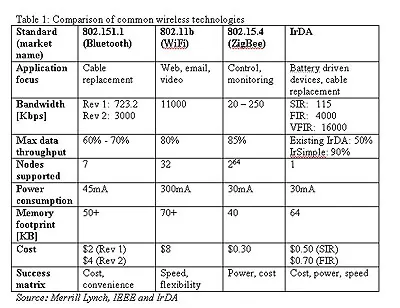
In the article Improvements in IR communication push it beyond cell phones and PDAs they give us an introduction to the improvements that IrSimple brings when combined with what they call "Point & Shoot", which is based on the FIR protocols (up to 4Mbps) and with VFIR (up to 16Mbps). By combining both technologies a performance efficiency (throughput) of 90% is achieved. Truly spectacular; an example of the performance of other protocols we can see in the following table:
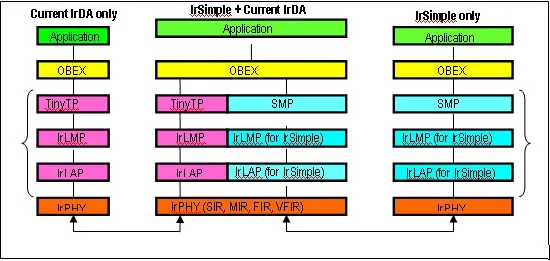
IrSimple has a structure very similar to the existing IrDA protocols and current implementations can be updated easily. It uses the OBEX profile to exchange data between two devices and only needs small adjustments in some layers of the IrDA protocol: the SMP protocol offers packet segmentation and reassembly services at the upper layer, OBEX. At the lower layer IrLMP is responsible for maintaining the links with one or multiple devices at the same time, keeping a record of the discovered devices. IrLAP is the protocol used to discover other devices, resolve address conflicts, start the connection, transfer the information and ensure a clean disconnection. IrLAP specifies the structure of the frames and the bytes of the packets. Error control and correction are solved through a sequence number implemented in the packet header.
In the following table we can see the current IrDA protocol stack, IrSimple and a combined solution. This structure is valid for the SIR, MIR, FIR and VFIR standards:
If you want a reference of what the current speeds are and other details of the IrDA protocols that exist so far you can take a look at this article: The downs and ups of infrared.
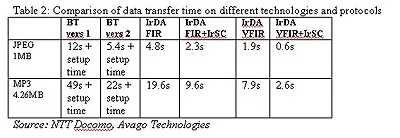
Before finishing the article take a look at this table about how long it takes to transfer a couple of sample files with the different wireless technologies available today, so you can better appreciate this new protocol: